National Airlines Flight 102
National Airlines Flight 102, a Boeing 747-400BCF, crashed after takeoff from Bagram on 29 April 2013 when unrestrained cargo shifted aft. All seven crew died.
Seven people died in this accident. The page below sets out what happened and why, because the footage is widely circulated without any explanation of the cause.
On 29 April 2013, National Airlines Flight 102 — a Boeing 747-400BCF registered N949CA, flying from Camp Bastion to Dubai via a refuelling stop at Bagram Airfield, Afghanistan — pitched up sharply after takeoff, stalled and crashed. All seven crew, all United States citizens, were killed.
The footage was recorded on the dashboard camera of a vehicle driving near the airfield.
What went wrong
The aircraft was carrying five heavily armoured vehicles — three Cougars and two Oshkosh M-ATVs — with a combined weight of around 80 tons.
During the takeoff, at least one vehicle broke free of its restraints and rolled aft through the cargo hold. In doing so it:
- struck the rack housing both the cockpit voice recorder and flight data recorder, which stopped recording;
- crashed through and damaged the rear pressure bulkhead;
- crippled key hydraulic systems;
- and broke the jackscrew of the horizontal stabiliser.
That last item decided the outcome. The horizontal stabiliser sets the aircraft’s pitch trim, and with its jackscrew destroyed and the hydraulics gone, the crew had no way to counter the pitch-up. The aircraft was uncontrollable from that moment.
The probable cause
The NTSB found the cause to be National Airlines’ inadequate procedures for restraining special cargo loads, which led the loadmaster to restrain the cargo improperly — combined with the aircraft being loaded with more heavy vehicles than could safely be secured in it.
Why this is a freighter problem specifically
On a passenger aircraft, the load is people in seats: individually light, evenly distributed, and physically incapable of moving aft in flight.
A freighter’s load is concentrated, extremely heavy, and held in place only by its restraints. If those restraints fail, tens of tons of metal are free to move — and because the aircraft is rotating nose-up at exactly that moment, it moves aft, which is the worst possible direction. It shifts the centre of gravity backwards, worsening the pitch-up that caused it to move in the first place.
That feedback loop is why cargo restraint on outsize loads is treated as a flight-critical system, not a loading detail. It is also the reason main-deck cargo carried alongside passengers on a 747 Combi attracted such regulatory scrutiny.
The aircraft
N949CA was a 747-400BCF — a passenger 747-400 rebuilt as a freighter, loading through a main-deck side door. See also the list of 747 accidents.
Related
Video
More in Videos
Videos
Boeing 747 videos — flight testing, engine overviews, factory documentaries and memorable moments caught on camera.
Awesome demonstration of reverse thrust on landing
An EVA Air Boeing 747 lands at Singapore after heavy showers, showing pronounced wing flex and full reverse thrust.
Boeing 747-400 Engine view in heavy rain
A wing-mounted view of a Boeing 747-400 engine running through heavy rain during taxi, takeoff and climb.
Boeing 747-8 Being Put through some tough tests
Boeing's 747-8 rejected takeoff test — accelerating to takeoff speed at maximum weight, then stopping on worn brakes with no reverse thrust.
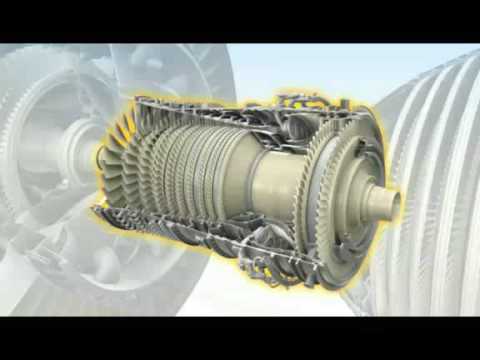
Boeing 747-8 Engine Overview from GE Aviation
GE Aviation explains the GEnx-2B engine that powers the Boeing 747-8, covering its fan, core and noise-reducing chevrons.
Boeing 747-8 Extreme Testing!
A short film covering the extreme testing the Boeing 747-8 undergoes, from wing loading to water ingestion and brake trials.