The 747 Supertanker
The 747 Supertanker was the largest aerial firefighting aircraft ever flown, carrying up to 24,000 US gallons. It was retired in 2021.

The Supertanker was a Boeing 747 converted into the largest aerial firefighting aircraft ever flown — an aeroplane that could lay a line of retardant several kilometres long in one pass.
How it worked
Conventional air tankers use gravity: doors open, the load falls out. The Supertanker used a pressurised delivery system instead, pushing retardant out through nozzles under pressure.
That mattered for two reasons. It let the crew control the flow rate, so a single load could be split into several separate drops or laid down at different intensities. And because the liquid was expelled rather than dropped, the aircraft could release from a higher altitude — safer over mountainous terrain, where low-level tanker flying is among the most dangerous work in aviation.
The aircraft
The first conversion, by Evergreen International Aviation, was based on a 747-200 and rated at up to 24,000 US gallons (94,850 litres). It was certified by the FAA and flew on fires in the United States and abroad.
After Evergreen ceased trading in 2013, the concept passed to Global SuperTanker Services, which converted a 747-400 named Spirit of John Muir. Certified in 2016, it fought fires in California, Chile, Israel and Bolivia, and became the aircraft most people picture when the Supertanker is mentioned.
The argument about whether it was worth it
The Supertanker was never uncontroversial. Supporters pointed to the sheer volume — one aircraft delivering what would take a fleet of smaller tankers many sorties.
Critics argued that wildfire suppression rarely rewards volume alone. Very large aircraft need long runways and specialised reloading facilities, which are seldom close to a fire; they cannot work the tight, low, terrain-following patterns smaller tankers fly; and dispatching one is expensive whether or not it changes the outcome.
Retirement
The end came for commercial reasons rather than operational ones. Global SuperTanker Services announced in May 2021 that it was ceasing operations, citing insurance and maintenance costs compounded by pandemic disruption to charter contracts. The aircraft was retired that October, sold to National Airlines, and converted back into a freighter.
| Manufacturer | Boeing |
|---|---|
| Variant | 747 Supertanker |
| Status | Retired 2021 |
| Typical capacity | Up to 24,000 US gallons (94,850 litres) |
Video
Frequently asked questions
- How much retardant could the 747 Supertanker carry?
- Up to 24,000 US gallons (about 94,850 litres) in the Evergreen conversion — roughly ten times a conventional air tanker. The later Global SuperTanker conversion of a 747-400 carried around 19,600 gallons.
- Why was the 747 Supertanker retired?
- Economics rather than capability. Global SuperTanker Services ceased operations in May 2021, citing insurance and maintenance costs made worse by pandemic disruption to charter work, and the aircraft was retired that October.
More in Special Boeing 747s

Special Boeing 747s
The 747s built for jobs no airliner does — Air Force One, the Dreamlifter, the Shuttle Carrier, a flying observatory, a firefighting tanker and an airborne laser.

The 747 ASB
Boeing's 1986 answer to the Airbus A340 and MD-11 — a shortened 747 with 747-400 technology. It was never built.
The 747 CMCA
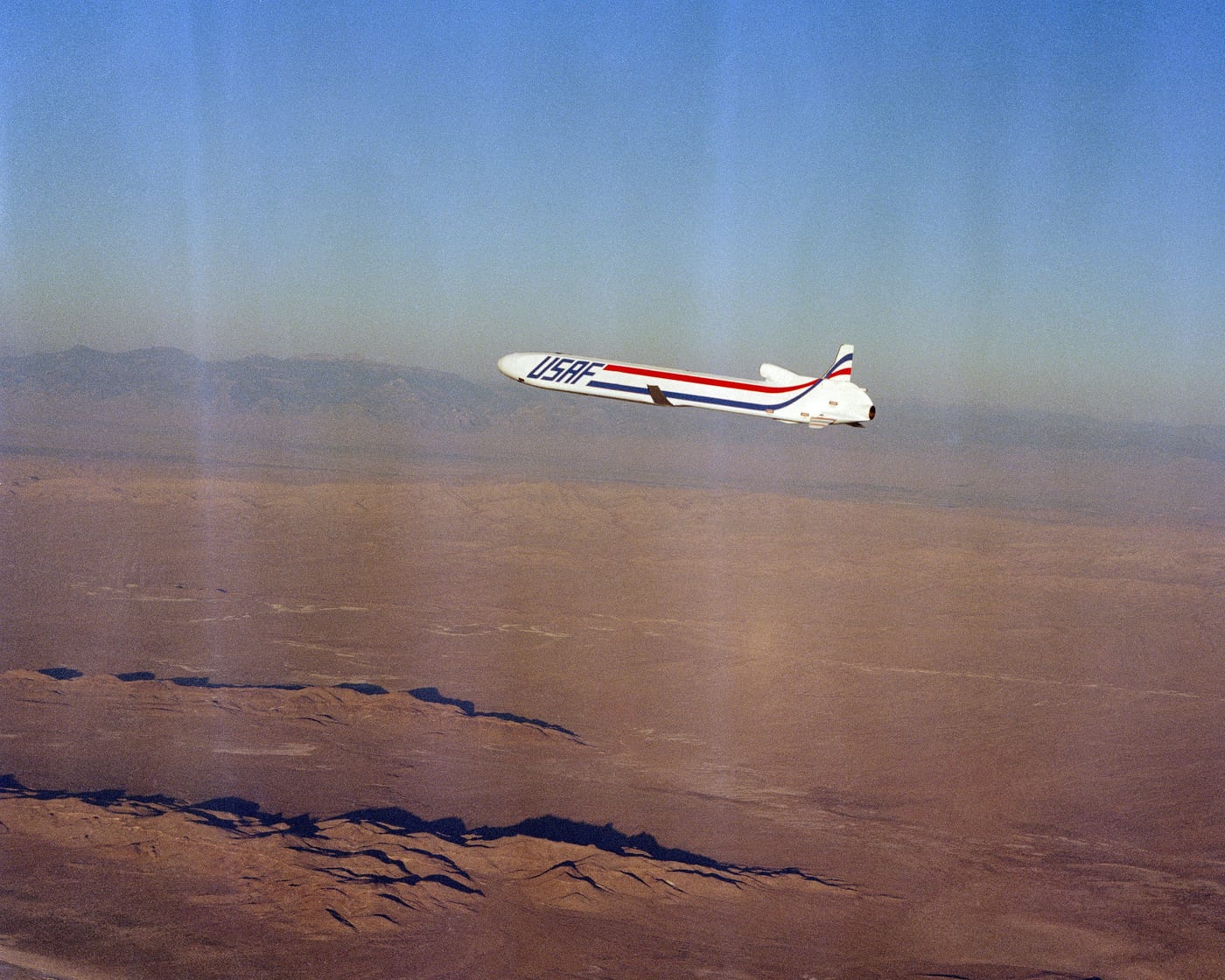
A proposed USAF Boeing 747 armed with up to 72 cruise missiles on rotary launchers, studied during B-1 development. It was never built.

The Boeing Dreamlifter
Four 747-400s rebuilt with a swollen fuselage and a swing tail to carry Boeing 787 wings and fuselage barrels between factories.

The 747 as a flying testbed
General Electric, Rolls-Royce and Pratt & Whitney all fly engines on 747s — because a four-engined aircraft can carry a strange engine safely.

SOFIA — the flying observatory
A former airline 747SP carrying a 2.5 m infrared telescope, flying above the water vapour that blocks infrared light from the ground. Retired 2022.