The 747, the DC-10 and the TriStar
The DC-10 sold 446 and the TriStar 250 against a break-even of 500 — two aircraft splitting one market while the 747 had its own.
The 747 is usually discussed on its own. It was not built in isolation: three widebodies arrived within three years of each other, and what happened to the other two explains a great deal about why the 747 lasted.
The three
| Entered service | Engines | Built | |
|---|---|---|---|
| Boeing 747 | January 1970 | 4 | 1,574 |
| McDonnell Douglas DC-10 | August 1971 | 3 | 446 |
| Lockheed L-1011 TriStar | April 1972 | 3 | 250 |
The DC-10 first flew on 24 October 1970 and the TriStar on 16 November 1970 — three weeks apart. Douglas got to market first, in August 1971, and never lost that lead.
Two aircraft, one market
The DC-10 and the TriStar were aimed at the same customers for the same missions: routes too big for a 707 and too small for a 747.
That market existed, and it was real. What it could not do was support two aircraft. Lockheed needed to sell around 500 TriStars to break even and sold 250. The programme contributed to Lockheed leaving commercial aviation altogether.
The DC-10 “won” with 446 — a number that would have been a disappointment on its own terms.
Both aircraft were competent. They destroyed each other by existing simultaneously.
Why the 747 was not in that fight
Because it was in a different one. The 747 was so much larger that airlines did not cross-shop it against a trijet; they bought 747s for trunk routes and trijets for everything a step down.
Boeing had briefly considered joining the trijet market with a shortened three-engined 747, studied against precisely these two aircraft. Engineering showed it would need a complete wing redesign, and the company built the 747SP instead. In hindsight, staying out of the segment that consumed Lockheed was fortunate as well as sensible.
What killed all three
The same thing, at different speeds.
Both trijets came to market too early — before twinjets had the power and efficiency for long-haul work. When ETOPS relaxed through the 1980s and let twins fly transoceanic routes, the entire rationale for a third engine evaporated. The DC-10 and TriStar were the first to go.
The 747 survived that wave because nothing could match its size, and then a second one because nothing could match its nose door. It took the 777 to finish the job — and even then the freighters carried on for another decade.
Three widebodies, three fates: one obsolete by the 1990s, one by the 2000s, and one that kept finding new reasons to exist until 2023.
Related
More in Features
Features
Longer pieces on the Boeing 747 — the factory built to make it, how it compares to the A380, what became of the retired fleet, and what it is like to fly.
The building that had to be built first
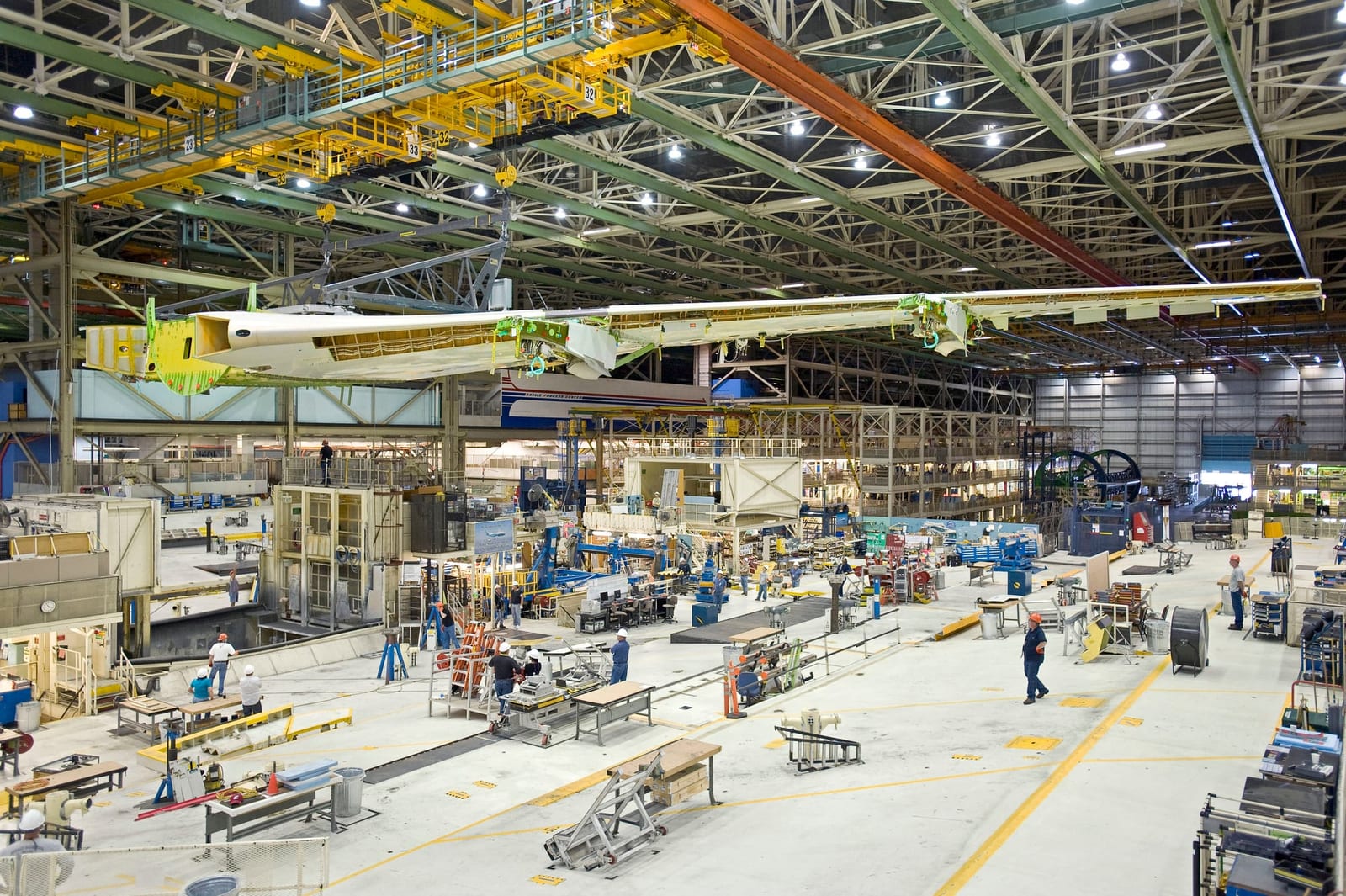
Boeing had no building big enough for the 747, so it built the largest building in the world by volume — and assembled the aeroplane while it was going up.
747 versus A380
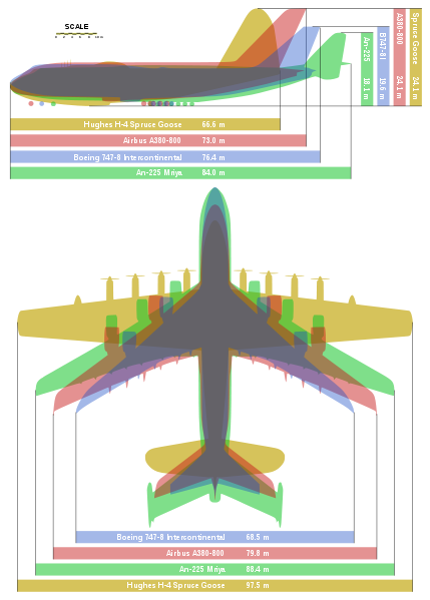
The two largest airliners ever built, compared — size, capacity, economics, and why both are now out of production.

Where the 747s went
Most retired 747s were scrapped. Others became freighters, museum pieces, restaurants, a hotel — and one launched satellites into orbit.
Flying the 747
What the 747 is like to fly — the type rating, the view from 30 feet up, the handling, and why pilots talk about it the way they do.

How 747 freight actually works
The nose door, motorised floor rollers, 96 by 125 inch pallets and 30 main-deck positions — how a 747 freighter is loaded and why it beat everything else.
