How 747 freight actually works
Nose door, motorised rollers, floor locks and 30 pallet positions — the mechanics of loading a 747 freighter, and why the nose door mattered so much.

Air freight is unglamorous and enormously important, and for fifty years the 747 was the aircraft that defined it. The reason is a design decision made in 1966 for a completely different purpose.
The nose door
The 747’s flight deck sits above the main deck so that the entire nose can hinge upward, leaving the fuselage open along its centreline. Boeing did that because it expected supersonic airliners to take over passenger flying and wanted the 747 to convert to a freighter.
The supersonic airliners never came. The freighters did, and the nose door turned out to be the single most valuable feature the aircraft had.
Why it matters: a side door lets you load anything that fits through the door. A nose door lets you load anything that fits in the aeroplane, because the load travels in along the length of the fuselage rather than being turned through 90 degrees inside a confined space.
With the nose raised, pallets and containers up to about 40 ft (12 m) long go straight in. Nothing else in commercial service could do that, which is why 747 freighters carried engines, rotor blades, machinery, satellite sections and helicopters for decades.
What happens on the ground
The loading itself is more automated than most people expect.
Motorised floor rollers. Power-drive units built into the cargo floor — essentially motorised wheels — move the loads into position. A small crew works from a control panel with joysticks, and a 747 main deck can be loaded in a remarkably short time.
Floor locks. Each pallet or container is locked to the floor. This is not a detail: it is what stops the load moving in flight. When restraint fails the consequences are catastrophic, as National Airlines 102 showed when unsecured armoured vehicles rolled aft on rotation and destroyed the aircraft’s control systems.
High loaders. Main-deck height is a long way up, so freight arrives on scissor-lift loaders sized for the job.
The units
Air cargo moves in ULDs — unit load devices — which are standard pallets and containers so that loads can be built up away from the aircraft and slid straight in.
| 747-400F | 747-8F | |
|---|---|---|
| Main deck pallets (96 × 125 in) | 30 | 34 |
| Maximum payload | ~248,600 lb | 308,000 lb (140 t) |
| Range at max payload | ~4,445 nmi | 4,120–4,390 nmi |
The 747-8F’s stretch added four main-deck pallet positions, plus extra capacity below — either two containers and two pallets, or three pallets.
Why the upper deck is short
Look at a factory freighter and the hump is stubby. The 747-400F and 747-8F revert to the short upper deck of the original 747-100, rather than the stretched deck of the passenger aircraft.
A freighter has no use for an upper-deck cabin, and every kilogram of structure up there is payload given away. So it goes.
Why freighters outlived the airliners
The economics are completely different, and this is the key to the whole 747 story.
A passenger 747 is retired when its fuel burn per seat stops competing with a newer twin — a commercial judgement that can arrive while the airframe is in fine condition.
A freighter is retired when the airframe runs out of cycles or the maintenance bill exceeds its remaining value. Freight flies fewer, longer sectors, and cargo does not complain about a dated cabin.
That is why 747-200Fs were still working in the 2010s, why conversions were worth doing, and why the production line stayed open until 2023 on freighter orders alone — a decade after passenger orders had effectively stopped.
Related
Video
Frequently asked questions
- How much can a Boeing 747 freighter carry?
- The 747-8F carries a maximum payload of 308,000 lb (140 tonnes). The 747-400F carries around 248,600 lb. The 747-8F's main deck takes 30-plus pallet positions.
More in Features
Features
Longer pieces on the Boeing 747 — the factory built to make it, how it compares to the A380, what became of the retired fleet, and what it is like to fly.
The building that had to be built first
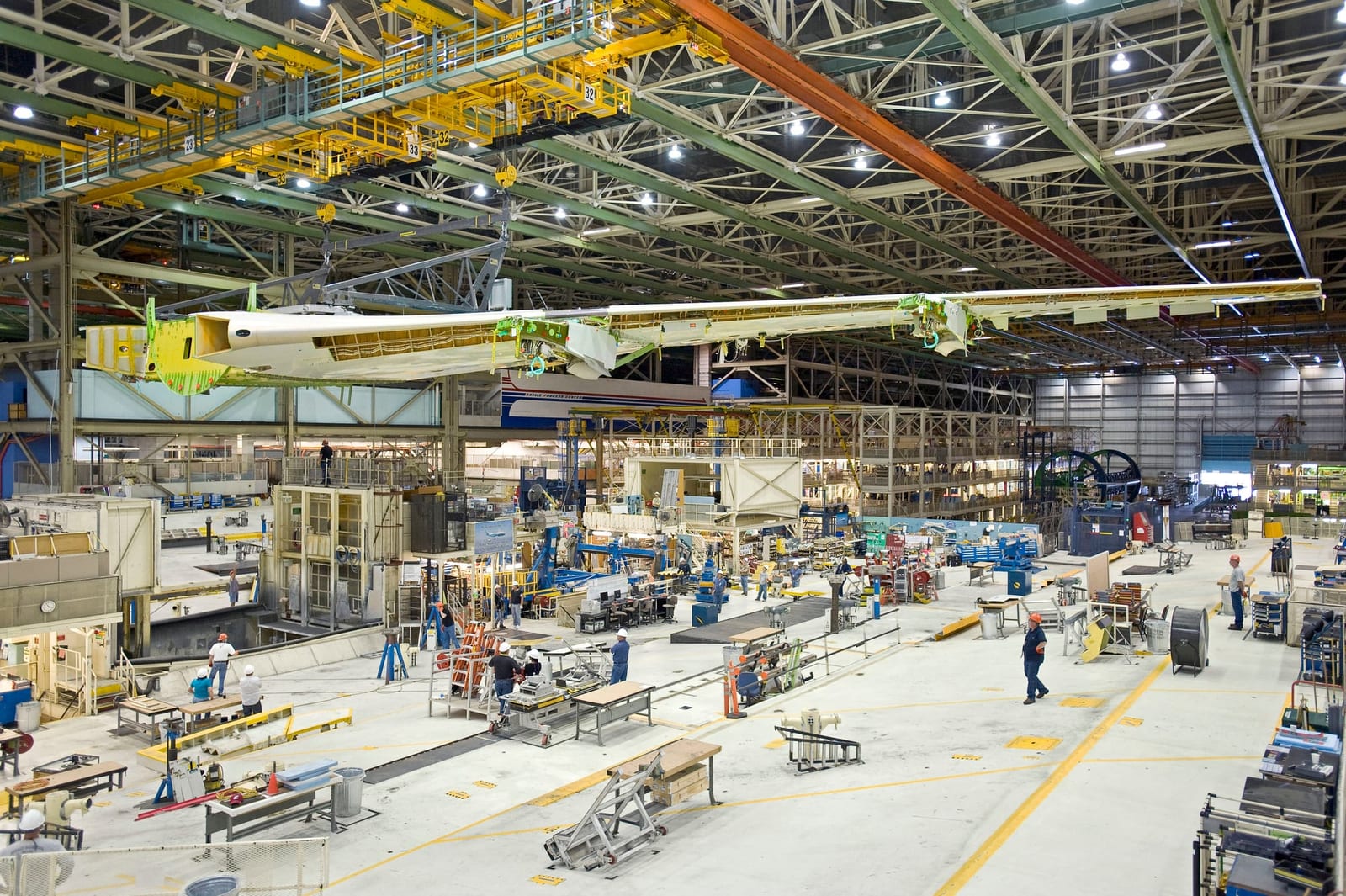
Boeing had no building big enough for the 747, so it built the largest building in the world by volume — and assembled the aeroplane while it was going up.
747 versus A380
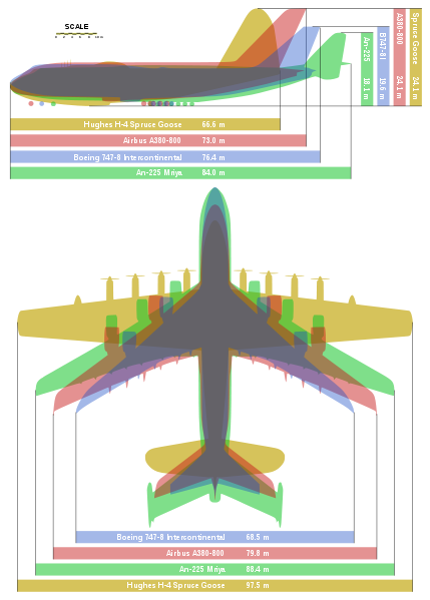
The two largest airliners ever built, compared — size, capacity, economics, and why both are now out of production.

Where the 747s went
Most retired 747s were scrapped. Others became freighters, museum pieces, restaurants, a hotel — and one launched satellites into orbit.
Flying the 747
What the 747 is like to fly — the type rating, the view from 30 feet up, the handling, and why pilots talk about it the way they do.
The 747 on screen
From the Airport disaster films to Air Force One and Executive Decision, the 747 is the most filmed airliner ever built.
