Maintaining a 747
The check cycle from walkaround to D check, why cycles matter more than hours, and why the maintenance bill is usually what retires a 747.
An airliner is not a machine that is repaired when it breaks. It is a machine that is taken apart on a schedule regardless of whether anything is wrong, and the 747’s schedule is long and expensive.
The check cycle
Maintenance is layered, from constant to almost never.
Line checks happen between flights — a walkaround, fluid levels, tyres and brakes, and anything the crew wrote up. Measured in minutes.
A checks, every few hundred flight hours, take the aircraft out of service overnight for more detailed inspection and servicing.
C checks, roughly every 18 months to two years, are substantial: the aircraft is in a hangar for one to a few weeks, large parts of the interior come out, and structural inspection begins in earnest.
D checks — heavy maintenance, every six to ten years — are close to disassembly. The interior is stripped, paint may be removed to inspect the skin beneath, structure is examined for corrosion and fatigue, systems are overhauled or replaced, and the aircraft is effectively rebuilt. A 747 D check takes weeks to months and costs millions.
Because the aircraft is already in pieces, a D check is also when cabin refits happen — grounding a 747 twice would be indefensible.
Why cycles matter more than hours
A car wears by distance. A pressurised aircraft wears mainly by cycles — one pressurisation and depressurisation per flight, loading and unloading the fuselage each time. See pressurisation for why.
This is why Japanese domestic 747s were structurally different aircraft. The 747-100SR, -300SR and 747-400D were reinforced specifically for far more cycles, and one ANA aircraft retired with more than 33,000 of them — where a long-haul 747 of the same age might have a few thousand.
What the accidents taught
Two 747s were destroyed by repairs that passed every subsequent inspection:
- Japan Air Lines 123 — a 1978 bulkhead repair failed in 1985.
- China Airlines 611 — a 1980 tailstrike repair failed in 2002.
Both drove the same conclusion: a repair is a permanent modification to the structure, its documentation has to outlive everyone involved, and repaired areas need inspection regimes of their own. Modern structural inspection programmes treat previously repaired structure as a distinct category for exactly this reason.
Why maintenance retires aircraft
This is the part that decides an aircraft’s fate.
A passenger 747 is usually retired for economics — its fuel burn per seat stops competing with a newer twin — while the airframe is still sound. That is why so many went to freighter conversion rather than scrap.
A freighter is retired when the next heavy check costs more than the aircraft is worth. At that point the engines, landing gear and avionics are worth more separately than the whole, and the aircraft is parted out.
Nothing dramatic happens. Somebody does the arithmetic and the aeroplane does not fly again.
Related
More in Features
Features
Longer pieces on the Boeing 747 — the factory built to make it, how it compares to the A380, what became of the retired fleet, and what it is like to fly.
The building that had to be built first
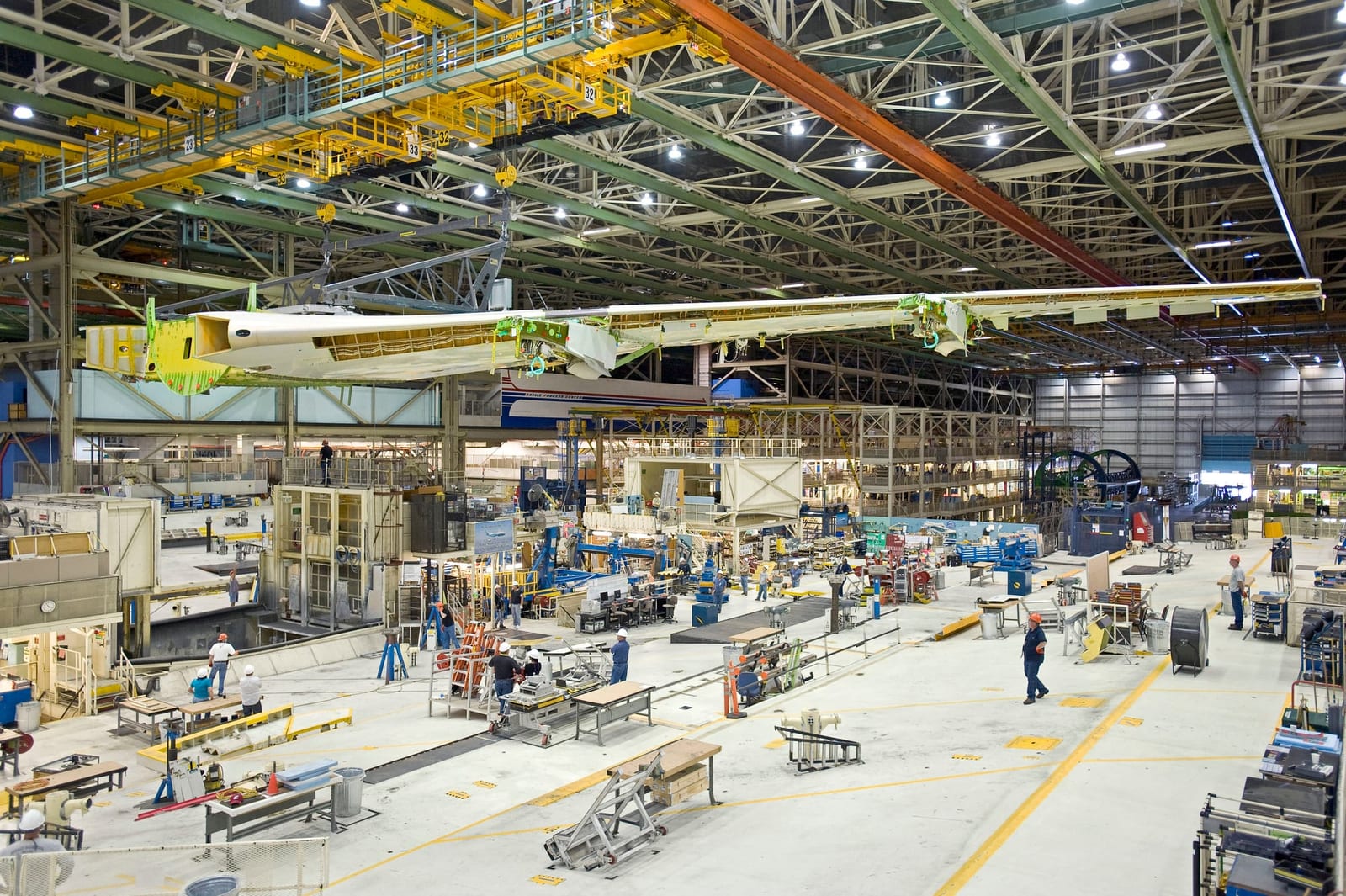
Boeing had no building big enough for the 747, so it built the largest building in the world by volume — and assembled the aeroplane while it was going up.
747 versus A380
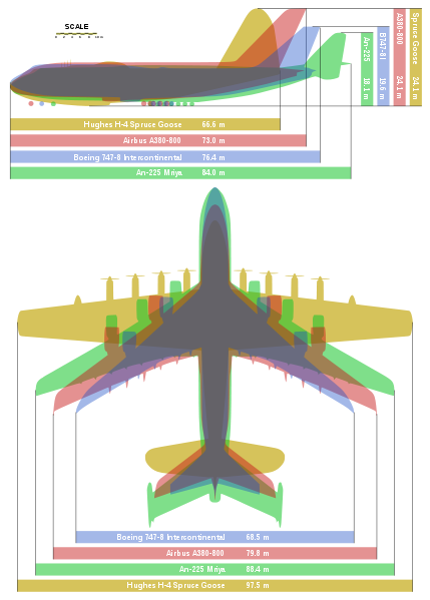
The two largest airliners ever built, compared — size, capacity, economics, and why both are now out of production.

Where the 747s went
Most retired 747s were scrapped. Others became freighters, museum pieces, restaurants, a hotel — and one launched satellites into orbit.
Flying the 747
What the 747 is like to fly — the type rating, the view from 30 feet up, the handling, and why pilots talk about it the way they do.

How 747 freight actually works
The nose door, motorised floor rollers, 96 by 125 inch pallets and 30 main-deck positions — how a 747 freighter is loaded and why it beat everything else.
