The head-of-state 747s
A dozen governments have flown 747s as head-of-state transport, and several still do — the market that kept the passenger 747-8 alive.

The VC-25A is the famous one, but the United States is far from the only government to fly a 747.
Who flies them
Countries that have used the 747 as head-of-state or VIP transport include the United States, Saudi Arabia, Oman, Brunei, Morocco, Qatar, Kuwait, Bahrain, the United Arab Emirates, Turkey, South Korea, Yemen and, until recently, Japan.
A few worth drawing out:
Oman. The Royal Flight operates an unusually complete set — a 747-8, a 747-400 and a 747SP.
Morocco. The Moroccan Air Force VIP fleet includes both a 747-400 and a 747-8, alongside a Royal Air Maroc aircraft dedicated to state use.
Qatar. The Amiri Flight took three VIP 747-8Is — one of which was subsequently given to the United States and brought into service as an interim Air Force One.
Japan. Operated two 747-400s from 1991 until March 2019, when they were replaced by 777-300ERs — the same substitution that ended the 747 at airlines.
Why heads of state kept buying them
Three reasons, and none of them is prestige alone.
Floor area. A head-of-state aircraft is an office, a conference room, a medical facility and accommodation for staff and press. Very few airframes offer that much usable space with intercontinental range.
Range. The 747SP in particular was almost purpose-made for the role — it carried far fewer passengers than a full 747 and flew further than anything else of its era, which is exactly what a small government delegation needs. Several SPs found their longest careers in this work, long after the airlines had given up on them.
Four engines. Not a legal requirement, but a preference that persists for aircraft carrying heads of state over oceans.
The market that outlived the airlines
This matters more than it looks. Only 48 passenger 747-8s were built, and airline demand was weak almost from the start — but VIP and head-of-state customers kept ordering, because nothing else did the job.
That is why the 747’s final chapter is a government one. Two 747-8s are being converted into the VC-25B, and the type will still be carrying heads of state long after the last airline retires one.
Related
More in Special Boeing 747s

Special Boeing 747s
The 747s built for jobs no airliner does — Air Force One, the Dreamlifter, the Shuttle Carrier, a flying observatory, a firefighting tanker and an airborne laser.

The 747 ASB
Boeing's 1986 answer to the Airbus A340 and MD-11 — a shortened 747 with 747-400 technology. It was never built.
The 747 CMCA
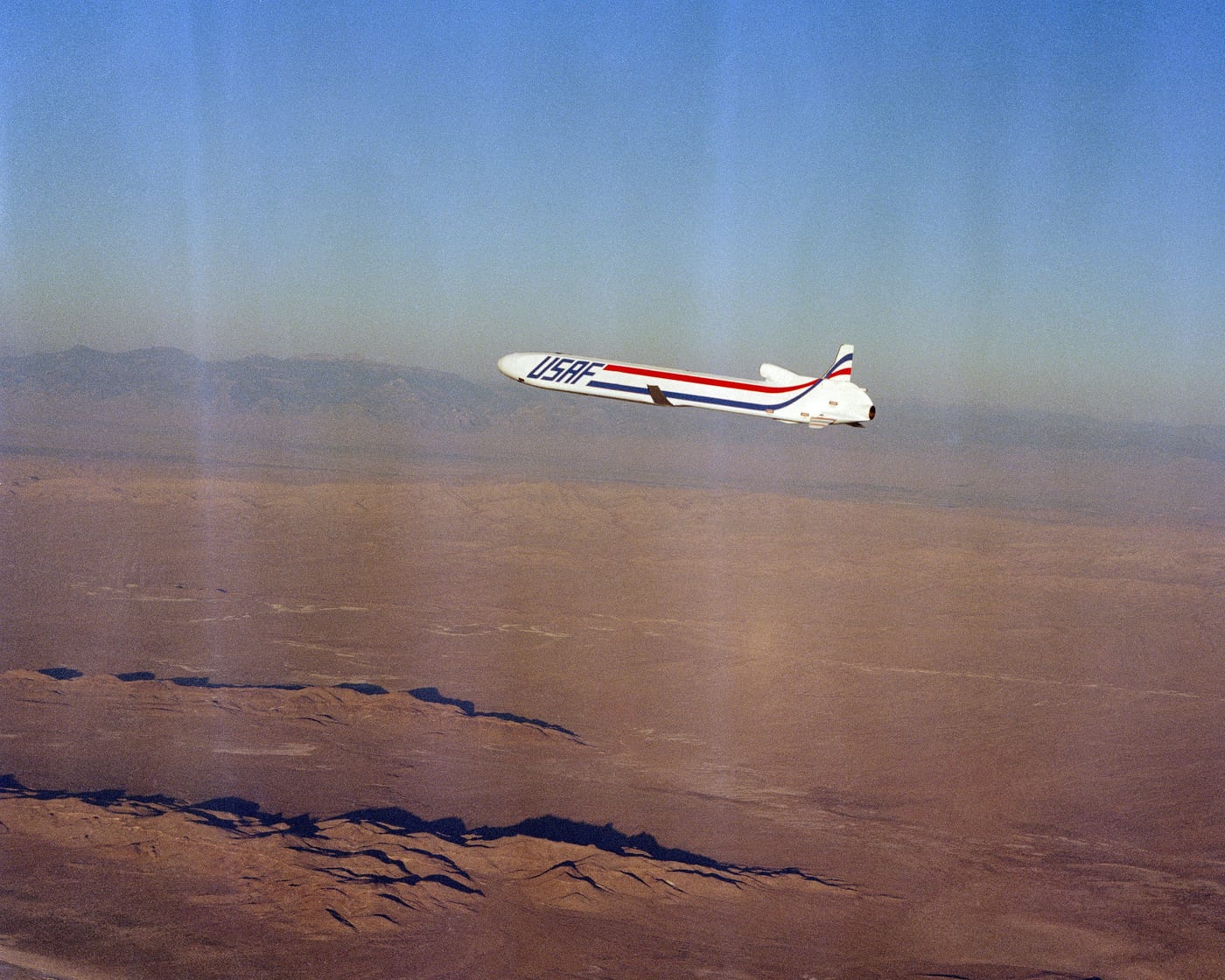
A proposed USAF Boeing 747 armed with up to 72 cruise missiles on rotary launchers, studied during B-1 development. It was never built.

The Boeing Dreamlifter
Four 747-400s rebuilt with a swollen fuselage and a swing tail to carry Boeing 787 wings and fuselage barrels between factories.

The 747 as a flying testbed
General Electric, Rolls-Royce and Pratt & Whitney all fly engines on 747s — because a four-engined aircraft can carry a strange engine safely.

SOFIA — the flying observatory
A former airline 747SP carrying a 2.5 m infrared telescope, flying above the water vapour that blocks infrared light from the ground. Retired 2022.