The YAL-1 Airborne Laser
The Boeing YAL-1 carried a megawatt-class chemical oxygen iodine laser in a modified 747-400F. It destroyed test missiles in 2010 but was cancelled and scrapped.

The YAL-1 is the strangest thing ever fitted to a 747: a megawatt-class chemical oxygen iodine laser (COIL) installed inside a modified 747-400 Freighter, intended to destroy ballistic missiles while they were still climbing.
How it was meant to work
A ballistic missile is most vulnerable during its boost phase — the first few minutes, when it is slow, bright, still climbing, and has not yet released any warheads or decoys.
The YAL-1 was designed to detect a launch with infrared sensors, track it, and hold a high-energy laser beam on the missile’s skin long enough to weaken the pressurised fuselage until it failed under its own flight loads. The beam was steered through the bulbous turret in the nose.
The chemistry to generate the beam took up much of the main deck — the COIL was a set of large chemical modules occupying the space where cargo pallets would normally sit.
It worked
On 11 February 2010, off the California coast, the YAL-1 destroyed a boosting ballistic missile in flight. It repeated the result days later against a second target.
That is worth stating plainly, because it is often forgotten: the Airborne Laser did what it was built to do.
Why it was cancelled anyway
The problem was never whether the physics worked. It was range.
The laser’s effective reach was on the order of a couple of hundred miles, which meant the aircraft would have had to orbit close to — or inside — hostile airspace to intercept a launch. A 747 is a large, slow, unstealthy target, and putting one in that position in wartime was not realistic.
Combined with the cost of the chemical fuel and the maintenance burden of the system, that made the case unsustainable. The programme was cancelled in December 2011 after around 16 years and roughly $5 billion of development.
The end
The single YAL-1 made its last flight on 12 February 2012 to Davis-Monthan Air Force Base in Arizona. It was stored there for two years, and scrapped in September 2014.
| Manufacturer | Boeing |
|---|---|
| Variant | Boeing YAL-1 |
| Status | Cancelled 2011; scrapped 2014 |

The aircraft was built on a 747-400 Freighter airframe.WikiMedia

Video
Frequently asked questions
- Did the Airborne Laser ever actually shoot down a missile?
- Yes. In February 2010 the YAL-1 destroyed a boosting ballistic missile in flight off the California coast, and repeated the feat days later. The technology worked; the programme was cancelled for other reasons.
- Why was the Airborne Laser cancelled?
- Cost and operational practicality. The laser's effective range was short enough that the aircraft would have had to orbit near hostile airspace to be useful — a dangerous place for a 747. The programme ended in December 2011 after about 16 years and roughly $5 billion.
More in Special Boeing 747s

Special Boeing 747s
The 747s built for jobs no airliner does — Air Force One, the Dreamlifter, the Shuttle Carrier, a flying observatory, a firefighting tanker and an airborne laser.

The 747 ASB
Boeing's 1986 answer to the Airbus A340 and MD-11 — a shortened 747 with 747-400 technology. It was never built.
The 747 CMCA
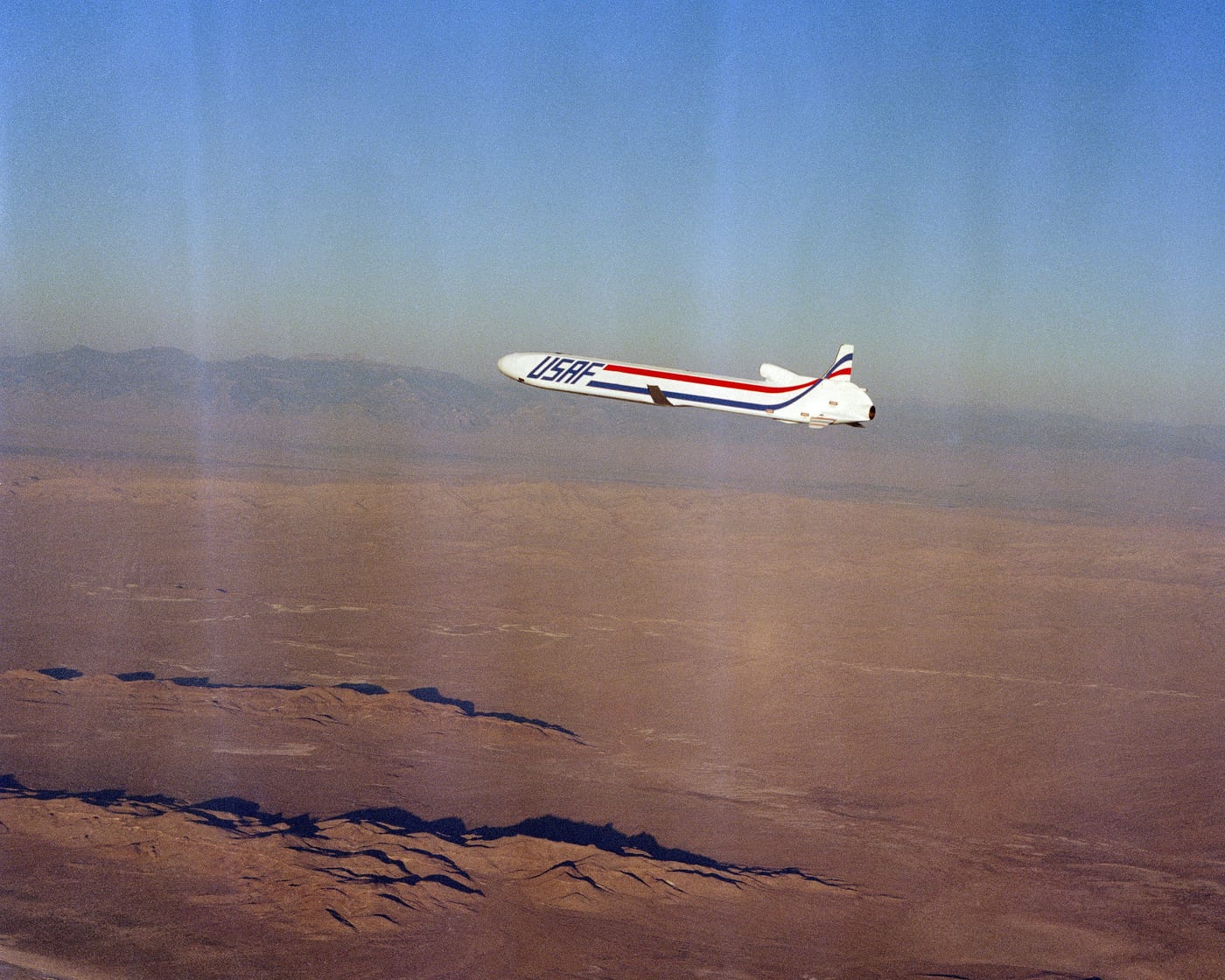
A proposed USAF Boeing 747 armed with up to 72 cruise missiles on rotary launchers, studied during B-1 development. It was never built.

The Boeing Dreamlifter
Four 747-400s rebuilt with a swollen fuselage and a swing tail to carry Boeing 787 wings and fuselage barrels between factories.

The 747 as a flying testbed
General Electric, Rolls-Royce and Pratt & Whitney all fly engines on 747s — because a four-engined aircraft can carry a strange engine safely.

SOFIA — the flying observatory
A former airline 747SP carrying a 2.5 m infrared telescope, flying above the water vapour that blocks infrared light from the ground. Retired 2022.