Car vs Boeing 747 Engines - Top Gear Style
A Top Gear-style test of cars against Boeing 747 engine thrust.
Richard Hammond tests whether a car can survive standing behind a Boeing 747 at power. A Citroën 2CV and a Ford Mondeo volunteer. Neither wins.
The numbers behind the stunt
Each engine on a 747-400 produces around 60,000 lb of thrust; the GEnx-2B on the 747-8 produces 66,500 lb. Four of them together push roughly a quarter of a million pounds.
But thrust is not really what wrecks the cars. What matters is the mass flow: a high-bypass turbofan of that size moves well over a tonne of air every second, and jet blast behind an aircraft at takeoff power can exceed hurricane wind speeds for a considerable distance behind the tailpipe.
Wind force rises with the square of velocity, so a jet blast at twice the speed hits four times as hard. A 2CV weighs about 600 kg. It is not a fair contest.
This is a real operational hazard
Airports take jet blast seriously enough to build infrastructure around it. Blast fences stand behind runup areas and at the ends of taxiways at many airports; ground crews work to marked minimum distances behind aircraft; and blast has repeatedly blown over ground vehicles, luggage carts and, at St Maarten’s famous Maho Beach, people.
The 747’s four engines spread that energy across a wider arc than a large twin does, but at close range that is little comfort.
The related failure mode
Blast is thrust going backwards deliberately. Reverse thrust is the same energy redirected forward — which is why a 747 landing on a wet runway throws up a wall of spray.
Related
More in Videos
Videos
Boeing 747 videos — flight testing, engine overviews, factory documentaries and memorable moments caught on camera.
Awesome demonstration of reverse thrust on landing
An EVA Air Boeing 747 lands at Singapore after heavy showers, showing pronounced wing flex and full reverse thrust.
Boeing 747-400 Engine view in heavy rain
A wing-mounted view of a Boeing 747-400 engine running through heavy rain during taxi, takeoff and climb.
Boeing 747-8 Being Put through some tough tests
Boeing's 747-8 rejected takeoff test — accelerating to takeoff speed at maximum weight, then stopping on worn brakes with no reverse thrust.
Boeing 747-8 Engine Overview from GE Aviation
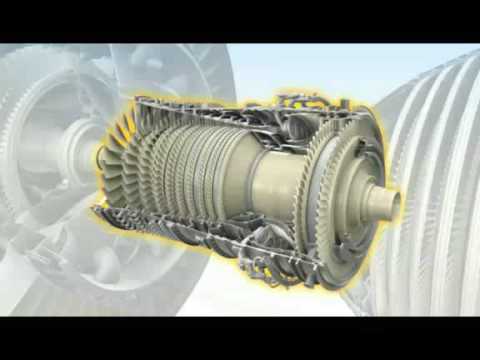
GE Aviation explains the GEnx-2B engine that powers the Boeing 747-8, covering its fan, core and noise-reducing chevrons.
Boeing 747-8 Extreme Testing!
A short film covering the extreme testing the Boeing 747-8 undergoes, from wing loading to water ingestion and brake trials.