Boeing 747 Gets Hit By Lightning
An ANA Boeing 747-200 struck by lightning during takeoff.
An All Nippon Airways Boeing 747-200 is struck by lightning shortly after takeoff, caught from the ground. The aircraft flew on.
This happens more than you think
A commercial airliner is struck by lightning roughly once a year on average. Most strikes are never noticed by passengers, and many are not noticed by the crew either until the post-flight inspection finds the entry and exit marks.
Aircraft do not only get struck — they frequently trigger the strike themselves. A large metal object moving through a strongly charged region of cloud distorts the electric field enough to initiate a discharge that would not otherwise have happened at that moment.
Why nothing happens
The aircraft is a Faraday cage. The 747’s aluminium skin conducts the current around the outside of the fuselage. The charge attaches at an extremity — usually the nose or a wingtip — travels over the skin, and leaves from another extremity, typically the tail or the trailing edge of a wing.
Static dischargers. Those small spikes trailing from the wing and tail trailing edges bleed accumulated static charge back into the air continuously, and give the current a designed exit point.
Fuel tanks are the real concern, and the one that gets the most engineering attention. The wing is the fuel tank on a 747, so every fastener, access panel and joint in that structure is designed and tested to prevent sparking inside it. Certification requires this to be demonstrated.
Composites changed the problem. An aluminium aircraft conducts naturally. Carbon fibre does not conduct nearly as well, so aircraft with composite structure — including the 787, and the parts of the 747-8 that use carbon fibre — have conductive mesh embedded in the skin to do the job the aluminium used to do for free.
What does get damaged
Usually very little: small burn marks at the attachment and exit points, occasionally a damaged static discharger or a radome that needs replacing. The aircraft is inspected and, in the great majority of cases, released back to service.
Related
More in Videos
Videos
Boeing 747 videos — flight testing, engine overviews, factory documentaries and memorable moments caught on camera.
Awesome demonstration of reverse thrust on landing
An EVA Air Boeing 747 lands at Singapore after heavy showers, showing pronounced wing flex and full reverse thrust.
Boeing 747-400 Engine view in heavy rain
A wing-mounted view of a Boeing 747-400 engine running through heavy rain during taxi, takeoff and climb.
Boeing 747-8 Being Put through some tough tests
Boeing's 747-8 rejected takeoff test — accelerating to takeoff speed at maximum weight, then stopping on worn brakes with no reverse thrust.
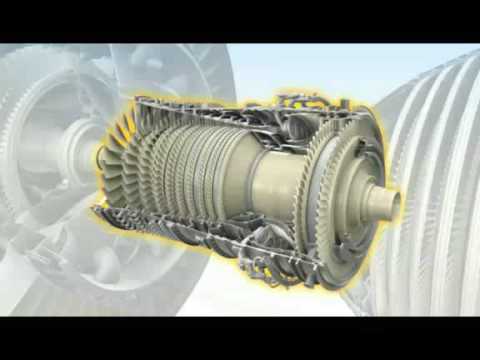
Boeing 747-8 Engine Overview from GE Aviation
GE Aviation explains the GEnx-2B engine that powers the Boeing 747-8, covering its fan, core and noise-reducing chevrons.
Boeing 747-8 Extreme Testing!
A short film covering the extreme testing the Boeing 747-8 undergoes, from wing loading to water ingestion and brake trials.