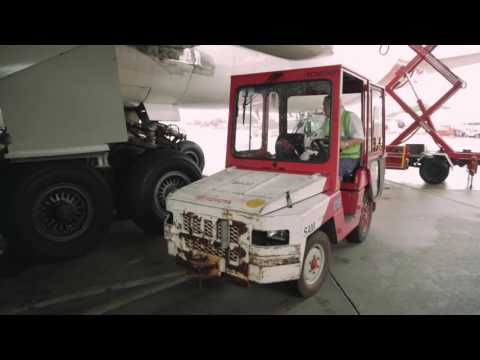
How to paint a Boeing 747-8
How a Boeing 747-8 is painted; the original embedded video is no longer available.
A note on this page. The original clip used a player that no longer works. It has been replaced with Lufthansa’s own film of a 747-8 being painted — Lufthansa being the launch customer and largest operator of the passenger version.
Paint is a weight problem
The unintuitive part of painting an airliner is that the paint is heavy enough to matter.
A full livery on a 747 runs to several hundred kilograms once it has cured. That weight is carried on every flight for years, and it costs fuel — which is why airlines take paint schemes seriously as an engineering question rather than only a branding one, and why some carriers leave large areas of the fuselage in bare or clear-coated metal.
It is also why the paint is applied in carefully controlled thicknesses. More paint is not better.
Why it takes days
The aircraft arrives in green primer. The surface is cleaned and prepared, masked, and then sprayed in stages — base coats first, then each colour of the livery in sequence, with curing time between them. Registration marks, door outlines and the hundreds of small placards and stencils required by regulation go on last.
A full 747 livery is a multi-day job in a dedicated hangar, and the Everett factory has paint hangars sized for it.
Related
More in Blog
Blog
News and notes about the Boeing 747 — retirements, deliveries, special liveries, engine milestones and unusual operations.
Air Force One slips again, and the cracks behind it
A Pentagon report puts the VC-25B cabin behind schedule, with hundreds of airframe repairs outstanding and delivery now expected in 2028.
Cosmic Girl's third career: launching hypersonic vehicles
The 747 that launched satellites for Virgin Orbit is now Stratolaunch's Spirit of Mojave, air-launching the Talon-A hypersonic testbed.
Lufthansa to sell two 747-8s and retire more 747-400s
The largest passenger 747 operator is thinning its fleet — but says the 747-8 stays core to long-haul into the 2030s.
How many 747s are still flying?
Around 85 passenger 747s and close to 300 in cargo, charter and government service — and why that ratio is the aircraft's whole late story.
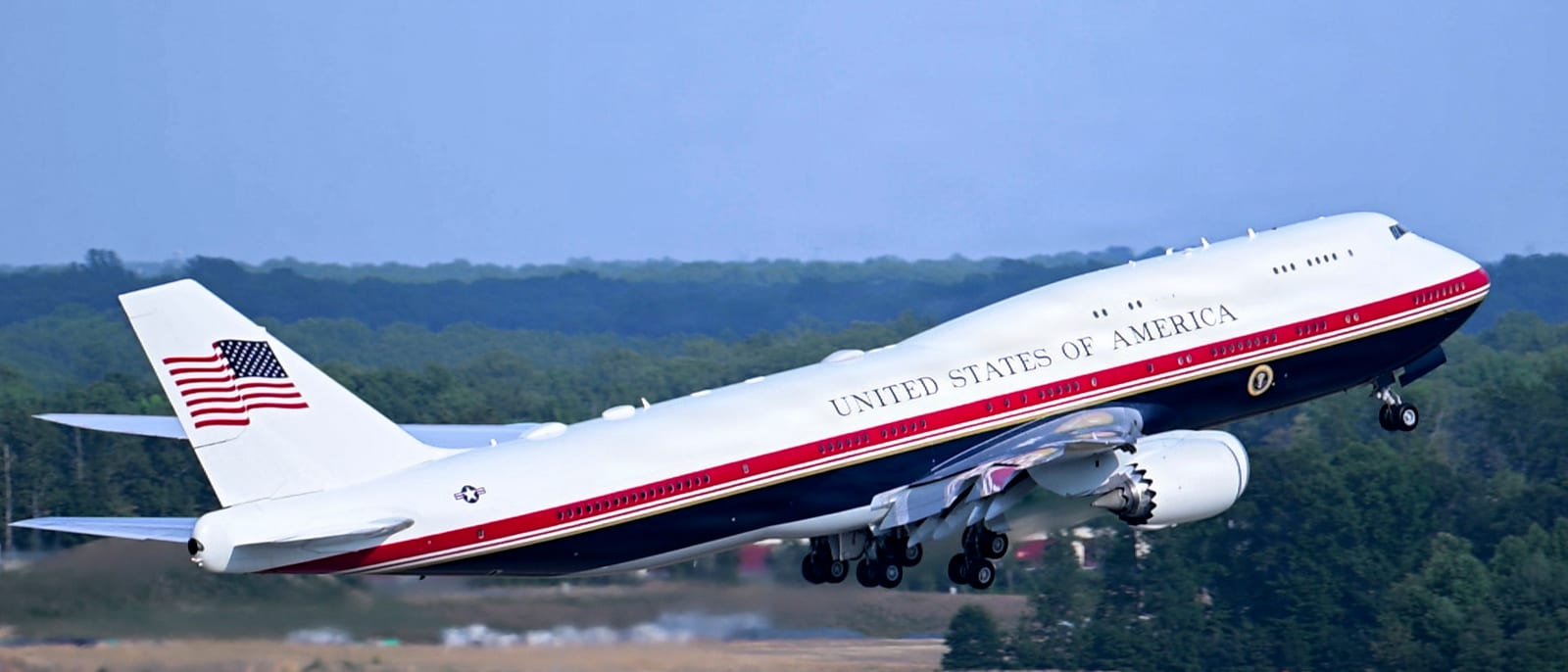
Qatar 747-8 enters service as Air Force One
The Boeing 747-8 given to the United States by Qatar flew its first presidential mission on 1 July 2026, designated the VC-25B Bridge.